

After more than ten years of relying on Google's custom domain email ecosystem, I have finally decided to move on. Here is why Google Workspace no longer fits the needs of solopreneurs, side projects and small teams, plus how a free alternative is changing the game.
A decade in the Google ecosystem
First, to be clear, I am not a Google hater. In fact, I have been using Google’s custom domain email service (formerly Google Apps, G Suite and now Google Workspace) for over a decade. I went "all in" on their ecosystem in the early days when they offered up to 100 free custom email accounts per domain. Over the years, that generous limit gradually shrank to ten, then to a few and eventually vanished, forcing users to pay for every single inbox.
This pricing shift is completely understandable. As a business, Google needs to generate revenue, show profit margins and present impressive quarterly reports to its stakeholders.
However, this model has become increasingly unsuitable for my specific workflow.
The high cost of small projects and side hustles
While I have institutional email accounts for my corporate roles at multinational corporations (MNCs) and various companies, I also manage this personal blog, community activities and several side projects.
These personal projects and community initiatives are small in scale, but they benefit from having their own websites, unique domain names and dedicated emails for their team members. In Vietnam, buying a Google Workspace inbox through distributors costs about 2,354,738 VND (~$100 USD) per year, including taxes.
For an established business, this is pocket change. But when you run multiple side projects where each domain handles fewer than 1,000 sent and received emails per month (less than 10,000 annually), paying that subscription fee for every single inbox feels hard to justify.

Furthermore, this pricing structure introduces several challenges:
- Temporary collaborators are hard to onboard. If you want to give a short-term contributor a professional email for a few months, you must purchase a full annual subscription of 2 million VND. If they leave after three months, Google won't issue a refund.
- Dedicated team or collaborative mailboxes also raise issues. I am not talking about free Google Group email list aliases. I mean a true shared mailbox with its own inbox and storage that multiple team members need to log into or manage collaboratively (such as
team@yourdomain.com). In Google Workspace, setting up a separate mailbox like this requires a paid user license, which will cost you another 2 million VND. - The solopreneur multi-tasker faces a dilemma. What if you are running ten different projects by yourself? It hardly makes sense to manage and pay for ten separate Google Workspace accounts just to have professional custom email addresses for each brand.
The crumbling value proposition of the Workspace bundle
In the past, the price tag was justifiable because Google Workspace offered a bundle of tools. Along with email, you got Google Drive and Google Chat. But today, the value proposition is falling apart:
- Communication has migrated as almost all modern teams I work with have moved to other dedicated communication tools (like Slack, Discord or Telegram). I haven’t touched Google Chat in years.
- Google Drive has sync issues and while its pricing is relatively competitive, its desktop sync application is notoriously sluggish and unreliable. I ended up moving to other storage providers that suit my workflow better.
- Inflexible storage upgrades make it difficult to scale. If one email inbox runs out of space, Google Workspace doesn’t let you easily upgrade just that single account's storage. You are often forced to upgrade the entire domain tier.
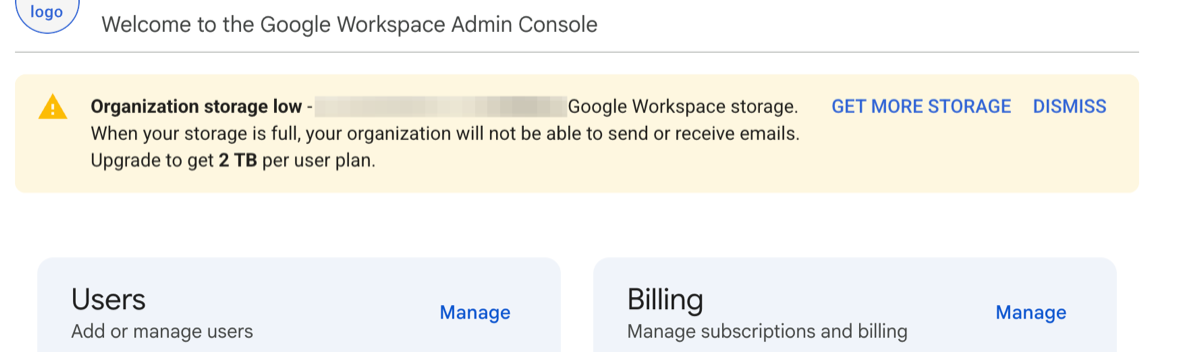
- The AI/Gemini bottleneck is another major issue. When Google rolled out its advanced AI plans, Workspace accounts faced frustrating restrictions. I couldn't buy the advanced AI subscription for my Workspace account, forcing me to register a separate personal
@gmail.comaccount just to use their AI features.
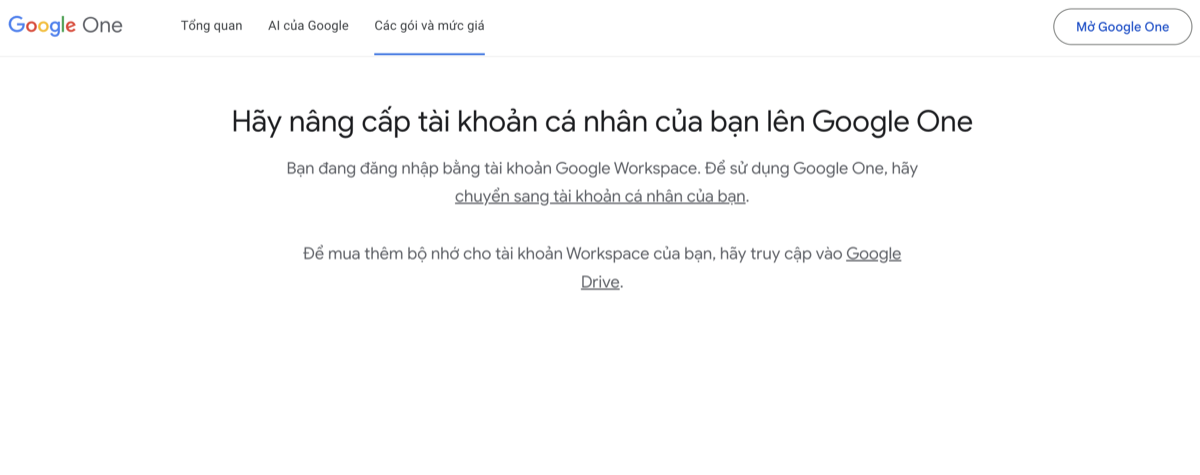
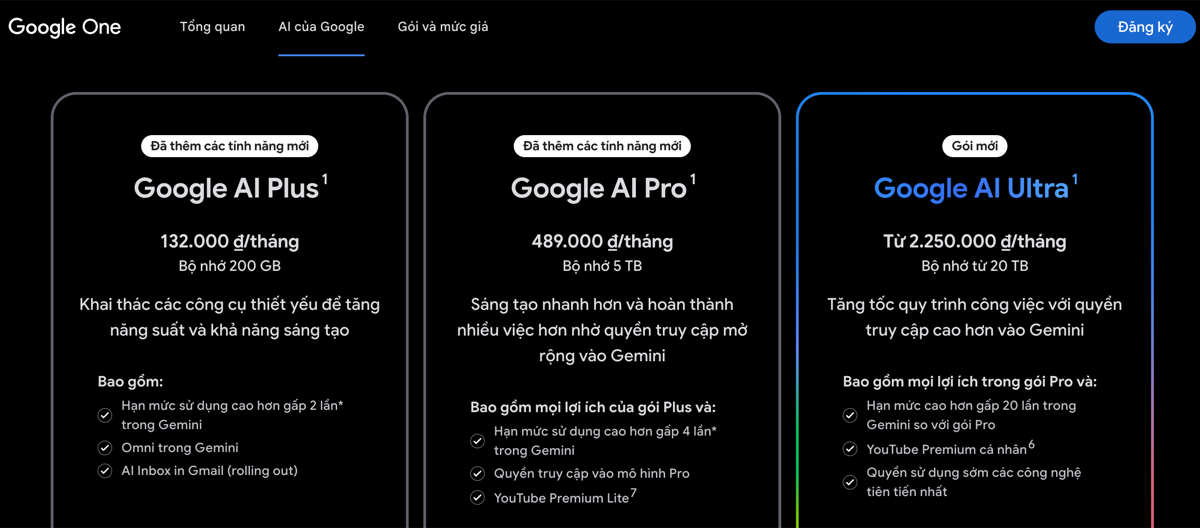
Ironically, paying for Google’s personal AI subscription also unlocks Google One storage (plans from 200GB up to 20TB), whereas Workspace inboxes stay on small allocations with frequent paid-upgrade prompts.
This taught me a valuable lesson that free features and generous limits are just hooks. Once you upload all your files and build your operations on a platform, they will inevitably tighten the constraints, forcing you to pay up.
Switching to Cloudflare email routing as a better alternative
The only remaining reason to stay with Google was the email system itself. Gmail is stable, secure and incredibly user-friendly. Having used various email clients across different corporations, I still find Gmail's interface to be the most pleasant. Furthermore, I dreaded the hassle of migrating my email history, contacts and settings.
But things change. Over a decade, technology evolves.
I found my solution in Cloudflare, the infrastructure giant that keeps half the internet secure and fast. I was already using Cloudflare for DNS management and website caching, but they also offer a feature called Cloudflare Email Routing.
While Cloudflare doesn't host your mailbox, it acts as a highly stable mail forwarder. It takes any email sent to your custom domain (such as contact@yourdomain.com) and routes it directly to your primary personal inbox (like a free personal @gmail.com or @outlook.com account). Given Cloudflare's massive infrastructure, their email forwarding is arguably more reliable than that of most dedicated email hosts.
By transitioning to this setup, I unlocked several benefits:
- Zero financial friction as you can create custom email addresses for any team member, project or department without thinking about subscriptions or budget.
- Simplified management by handling ten different custom domain emails from a single primary inbox. This removes the need to log in and out of multiple accounts or deal with manual inbox forwarding rules.
- Virtually zero cost since routing and receiving professional custom domain emails is now completely free.
For startups and small-to-medium enterprises (SMEs), 2 million VND per year might not be a dealbreaker. But as the Vietnamese saying goes, "Thịt chân muỗi cũng là thịt" (every little bit counts). Maintaining a low overhead is a core competitive advantage, especially when it cuts out expenses that don't add real value to your day-to-day work.
Saying goodbye
So, goodbye Google Workspace. I appreciate the decade of reliable service and will happily return and pay when my team scales to a point where we genuinely need your collaborative features. But for now, as my projects remain lean and agile, my needs have evolved.
It’s time to move on.